
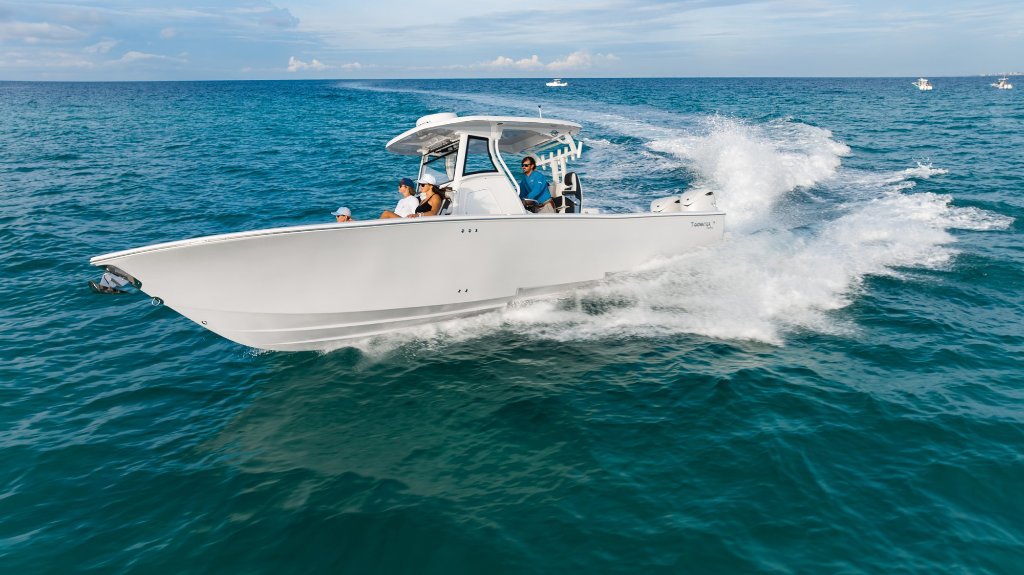
When you're running out of Kemah at dawn, aiming for the rigs in search of yellowfin or making a quick run across Galveston Bay for some slot reds, the last thing you want is a boat that feels like it's dragging through the water. We talk a lot about electronics and rod setups, but the foundation of every great offshore day starts beneath the waterline. For those looking at Tidewater center consoles, you've likely noticed their signature stepped hull design—a feature that is as much about pure performance physics as it is about comfort.
Understanding how this design actually shifts your ride quality and fuel economy is a game-changer when shopping for your next rig. Let’s break down the engineering behind the Tidewater stepped hull and why it makes a difference when you’re facing that legendary Gulf Coast chop.
What Is a Stepped Hull?
In simple terms, a stepped hull features a distinct, transverse break—or "step"—integrated into the bottom of the boat. Think of it as a way to trick the physics of hydrodynamics. As you accelerate, this notch allows air to be pulled underneath the hull, creating a layer of aeration between the fiberglass and the water surface.
By reducing the "wetted surface"—the area of the hull that stays in constant friction with the water—you minimize drag. It’s the nautical equivalent of reducing rolling resistance on a high-performance tire. When executed correctly by Tidewater’s engineers, this leads to:
- Snappier acceleration that gets you on plane faster, even when fully loaded with ice and gear.
- Higher fuel efficiency at cruising speeds, allowing you to venture further offshore without needing an extra fuel bladder.
- A more predictable, level ride through variable sea states.
Pro Tip: While the design is brilliant, remember that performance is a total package. Always consider your boat's weight distribution; overloading the stern can negate the benefits of the step by disrupting the airflow.
How Does a Stepped Hull Work?
The magic happens the moment the boat begins to plane. By managing the boundary layer of water, the hull doesn't just push through the water—it rides on a mix of water and air.
1. Controlled Airflow
As the boat reaches speed, the step acts as a vacuum break, pulling air from the sides of the hull into the center line, creating a lubricating layer.
2. Reduced Wetted Surface
Less hull touching the water equals less drag. Less drag translates directly into higher speeds at lower RPMs, keeping your engine from working harder than it needs to.
3. Efficient Planing
Because there is less resistance, the transition from displacement speed (plowing) to planing speed is smoother and often requires less throttle input.
4. Responsive Performance
Tidewater designs these hulls to be nimble. You’ll notice the responsiveness during turns, as the step allows for a tighter, more stable grip on the water compared to traditional hull shapes that might "slip" in sharp maneuvers.
Stepped Hull Performance for Texas Gulf Coast Boaters
We all know the Texas coast is unique. One hour you’re navigating the shallow, tight channels near Freeport, and the next you’re punching through a 3-foot beam sea heading to deep water. A stepped hull excels in this environment because it helps the boat maintain its efficiency even when you have to adjust your trim for varying wave frequencies.
When comparing offshore fishing boats, look at the total package. A hull might be fast, but if it doesn't handle the infamous "Gulf chop" with a soft landing, you're going to be exhausted by the time you reach the fishing grounds. Tidewater matches their steps with aggressive deadrise, ensuring you get the efficiency of the step without sacrificing the deep-V comfort required for 40-mile runs.
Potential Benefits of a Stepped Hull
Fuel Efficiency
On those long treks to the blue water, every gallon counts. By reducing drag, stepped hulls often allow you to cruise at a higher speed with a lower fuel burn. Recommendation: During your sea trial, pay close attention to your GPS speed at 4,000 RPMs versus a non-stepped hull of similar weight.
Acceleration and Planing
Whether you're dodging storms or just trying to beat the fleet to the first spot, getting on plane quickly is crucial. A stepped hull helps you find that "sweet spot" on the throttle faster, which is invaluable when carrying heavy livewells or tournament-level tackle loads.
Ride and Handling
Stepped hulls are surprisingly intuitive. They tend to track very straight, reducing the need for constant steering corrections. However, remember that trim tab usage is key here—learning to dial in your tabs in combination with the stepped hull is the secret to a dry, comfortable ride in rough water.
Why Doesn't Every Boat Use a Stepped Hull?
Engineering a stepped hull is expensive and technically demanding. If the step is positioned or angled incorrectly, it can lead to erratic handling or "ventilation" issues where the propeller loses its bite. Tidewater has spent years in R&D ensuring their steps are perfectly integrated. When you buy a Tidewater, you're buying a hull that has been stress-tested for real-world offshore application, not just a gimmick on a showroom floor.
Stepped Hull vs. Traditional Monohull
Think of it as a tool for a specific job. A traditional, constant-deadrise monohull is a classic, predictable platform that works well in almost any condition. A stepped hull is for the boater who prioritizes efficiency, speed, and modern performance. If you find yourself making long offshore runs, the stepped hull will likely provide a more enjoyable, cost-effective experience. If your primary focus is strictly shallow-water flats fishing, a more traditional hull might offer the specific handling traits you prefer.
What to Consider When Buying a Tidewater Boat
Before you commit, ask yourself these three questions:
- What’s my primary mission? (Tournament fishing, family sandbar days, or offshore trolling?)
- How many people are usually on board? (Weight affects how the step performs; ensure your horsepower matches your average passenger count.)
- Did I seatrial in real conditions? Don't just demo on a glass-calm Tuesday. Try to get out on a day with a bit of wind to see how the boat performs when it actually has to work.
Is a Tidewater Stepped Hull Right for You?
For the Texas angler who wants to do it all, the Tidewater stepped hull represents the perfect middle ground between high-speed efficiency and offshore ruggedness. It’s a design that rewards the smart skipper who knows how to utilize trim and speed to optimize the boat's natural tendencies.
Frequently Asked Questions About Tidewater Stepped Hulls
What is a stepped hull on a boat?
It’s a design feature where the hull bottom is broken into sections by a transverse step, allowing air to be introduced under the boat to reduce water resistance.
Are stepped hulls good for offshore fishing?
Absolutely. They are highly favored for offshore work because they increase cruising range and acceleration, which are vital when you're working the deep-water canyons of the Gulf.
Do stepped hulls improve fuel economy?
Yes, by reducing the wetted surface area, you significantly decrease drag, which allows for better fuel efficiency at common cruising speeds.
Are stepped hulls better than traditional hulls?
It’s not about "better," it’s about "optimized." Stepped hulls are optimized for performance and efficiency, while traditional hulls offer a classic, predictable ride. Your choice should be dictated by your specific style of boating.
Ready to Find Your Perfect Boat?
Browse our full inventory of center consoles, bay boats, and offshore fishing machines, or reach out to our team for personalized help.


