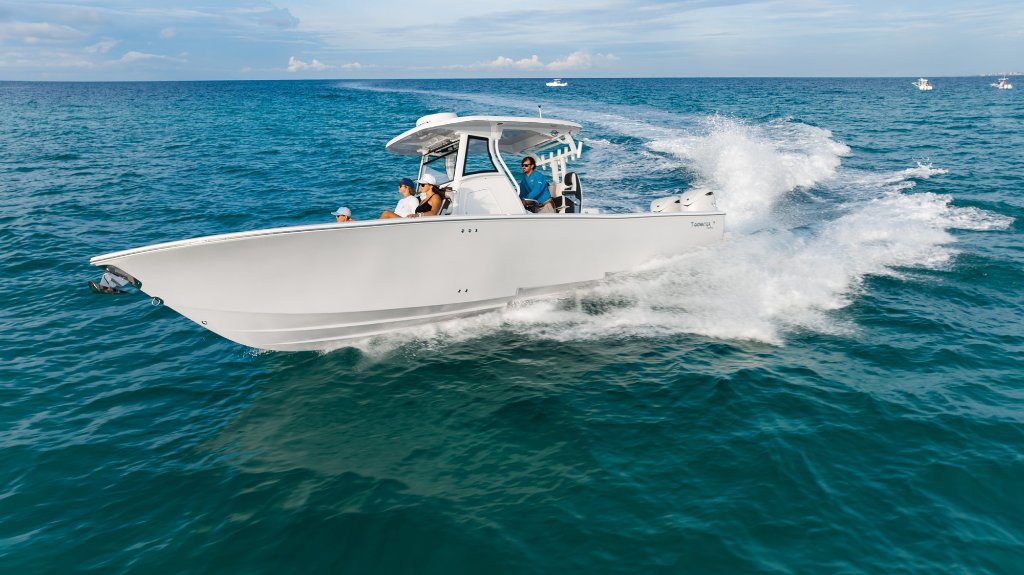
When shopping for a center console boat, hull design is one of the most important factors to consider. The hull affects how a boat accelerates, handles rough water, uses fuel, and performs offshore.
One feature that gets attention on select Tidewater models is the stepped hull design. Rather than being a cosmetic feature, a stepped hull is an engineered approach to managing water flow beneath the boat.
For anglers and families looking at Tidewater boats for sale in Texas, understanding how a stepped hull works can help you determine whether this type of hull is right for your boating needs.
What Is a Stepped Hull?
A stepped hull incorporates one or more transverse steps into the bottom of the hull. These steps help introduce air beneath portions of the running surface as the boat moves through the water.
This changes how much of the hull remains in contact with the water while the boat is on plane. With less wetted surface, there can be less resistance as the boat moves forward.
The result can be improvements in several areas of performance, including:
-Acceleration
-Cruising efficiency
-Handling
-Ride characteristics
-Overall performance
However, the benefits of a stepped hull depend on the specific hull design, boat weight, engine setup, load, water conditions, and how the boat is operated.
How Does a Stepped Hull Work?
The basic concept behind a stepped hull is controlling water and airflow beneath the boat.
As a stepped-hull boat accelerates and gets on plane, the steps help introduce air into the water flow beneath the hull. This can reduce the amount of hull surface directly contacting the water.
1. Controlled Airflow
As the boat moves forward, the steps help bring air underneath portions of the hull.
2. Reduced Wetted Surface
With less hull surface contacting the water, the boat can experience less drag.
3. Efficient Planing
Reduced resistance can help the boat reach and maintain planing speeds efficiently, depending on the overall hull and propulsion setup.
4. Responsive Performance
A well-designed stepped hull can contribute to quicker acceleration and responsive handling when properly matched with the boat's engine and intended use.
This is why stepped-hull engineering is more than simply adding a feature to the bottom of a boat. The steps must be carefully designed and integrated into the entire hull.
Stepped Hull Performance for Texas Gulf Coast Boaters
For boaters on the Texas Gulf Coast, hull performance can be especially important. Conditions can change quickly between protected bays, nearshore waters, and the open Gulf of Mexico.
Anglers may encounter everything from relatively calm bay water to wind-driven chop and offshore swells. A boat's hull design plays an important role in how it handles these changing conditions.
When comparing offshore fishing boats for sale in Texas, buyers should consider more than top speed. Acceleration, cruising efficiency, handling, ride comfort, fuel capacity, and sea-keeping ability can all affect the overall boating experience.
Potential Benefits of a Stepped Hull
A stepped hull can offer several potential performance advantages when properly engineered and matched to the boat.
Fuel Efficiency
Reducing wetted surface can reduce resistance while the boat is on plane. Depending on the boat, engine, load, and operating conditions, this may contribute to improved fuel efficiency.
Rather than focusing on a specific fuel-economy percentage, boat buyers should evaluate actual performance during a sea trial and compare fuel consumption at their typical cruising speed.
Acceleration and Planing
A stepped hull can help reduce resistance as the boat accelerates. Combined with the appropriate outboard configuration, this can contribute to responsive acceleration and efficient planing performance.
For anglers who regularly travel between fishing spots or make longer runs offshore, efficient cruising performance can be an important consideration.
Ride and Handling
Hull design also influences how a center console handles changing water conditions.
A stepped hull can be engineered to help the boat maintain performance and control when running through coastal chop. However, no hull design eliminates rough-water motion entirely. Boat speed, trim, sea conditions, passenger weight, and operator experience all affect ride quality.
Offshore Performance
For Gulf Coast anglers, offshore capability is often a major consideration when choosing a boat.
A well-designed hull can contribute to predictable handling and sea-keeping characteristics. When evaluating a Tidewater center console boat, consider how the complete package, including hull design, deadrise, weight, fuel capacity, and engine configuration—matches the type of offshore fishing you plan to do.
Why Doesn't Every Boat Use a Stepped Hull?
Stepped hulls require careful engineering and manufacturing.
The steps need to work together with the hull's running surface, chines, strakes, deadrise, weight distribution, and propulsion system. Improperly designed steps can create handling issues rather than performance improvements.
Because of this, stepped-hull construction requires careful design, tooling, and manufacturing processes.
For buyers, the important takeaway is that a stepped hull should be evaluated as part of the entire boat design, rather than viewed as a standalone performance feature.
Stepped Hull vs. Traditional Monohull
When comparing boats, you may encounter both stepped and conventional monohull designs.
A traditional monohull has a continuous running surface, while a stepped hull incorporates breaks or steps into that surface to influence water and airflow.
Neither design is automatically the best choice for every boater.
The right hull depends on factors such as:
-Where you normally boat
-How often you fish offshore
-Typical sea conditions
-Desired cruising speed
-Fuel capacity and range
-Number of passengers
-Engine configuration
-Fishing and recreational priorities
A boat that performs well offshore may have different characteristics from one optimized for shallow-water bay fishing or family cruising.
What to Consider When Buying a Tidewater Boat
If you're researching Tidewater boats for sale in Texas, don't make your decision based on hull design alone.
Consider the complete boat and how it fits your typical use.
Where Will You Boat?
If you primarily fish Texas bays and inshore waters, your priorities may differ from someone who regularly travels offshore.
How Many People Will You Carry?
Passenger capacity, seating, storage, and deck space become increasingly important for family boating and larger fishing groups.
What Type of Fishing Do You Do?
Offshore anglers may prioritize fuel capacity, range, livewells, fish boxes, rod storage, and electronics, while inshore anglers may place greater importance on draft and maneuverability.
What Engine Configuration Do You Need?
The hull and outboard package should work together. Engine horsepower, propeller selection, boat weight, and load all influence real-world performance.
Can You Take a Sea Trial?
A sea trial is one of the best ways to evaluate a boat before purchasing. Pay attention to acceleration, cruising performance, steering response, handling, visibility, noise, and ride quality in the conditions you are likely to encounter.
Is a Tidewater Stepped Hull Right for You?
A stepped hull can provide meaningful performance benefits, but the best boat is ultimately the one that matches your boating habits.
If you're looking for a center console boat for sale in Texas, think about where you fish, how far you travel, how many people you typically carry, and what type of water you encounter most often.
For Texas Gulf Coast boaters who want a combination of fishing capability, performance, and recreational versatility, exploring the hull design and overall specifications of each Tidewater model can help narrow down your options.
Find Tidewater Boats for Sale in Texas
Looking for Tidewater boats for sale in Texas? Texas Sportfishing Yacht Sales offers Tidewater models for buyers searching for center console boats, fishing boats, and Gulf Coast-ready boats.
Browse the current Tidewater boat inventory to compare available models, specifications, features, pricing, and engine configurations.
If you're not sure which Tidewater model or hull configuration is right for your needs, contact Texas Sportfishing Yacht Sales to discuss your boating plans and available options.
Frequently Asked Questions About Tidewater Stepped Hulls
What is a stepped hull on a boat?
A stepped hull has one or more breaks or steps incorporated into the hull's running surface. These steps can introduce air beneath the hull and reduce wetted surface while the boat is on plane.
Are stepped hulls good for offshore fishing?
A properly engineered stepped hull can offer performance and handling advantages for offshore boating. However, offshore capability depends on the entire boat design, including hull geometry, deadrise, weight, fuel capacity, and propulsion.
Do stepped hulls improve fuel economy?
Reducing wetted surface can reduce drag and potentially improve fuel efficiency. Actual fuel economy varies based on the specific boat, engine, load, speed, water conditions, and operating habits.
Are stepped hulls better than traditional hulls?
Not necessarily. Stepped and conventional hulls have different characteristics. The best choice depends on where you boat, how you use the boat, and the performance characteristics you prioritize.
Where can I find Tidewater boats for sale in Texas?
Texas Sportfishing Yacht Sales offers Tidewater boats and current inventory for buyers shopping for center console and fishing boats on the Texas Gulf Coast.


